

What is the Gender Pay Gap?
Mean Pay Gap – The mean gender pay gap refers to the difference between the average hourly rate for a man and the average hourly rate for a woman. This difference is then expressed as a percentage.
Median Pay Gap – The median pay gap is the difference between the middle point of men’s earnings and the middle point of women’s earnings. This is calculated by listing all male and female hourly rates from smallest to largest. The value in the middle is the median. The median gap is the percentage difference between the male median and the female median.
*The gender pay gap is different from equal pay. Equal pay relates to men and women receiving equal pay for carrying out the same or equivalent work, whereas the gender pay gap measures the difference in average earnings across the workforce.
2.88%
Mean Gap
0.91%
Median Gap
Proportion of employees in each pay quartile
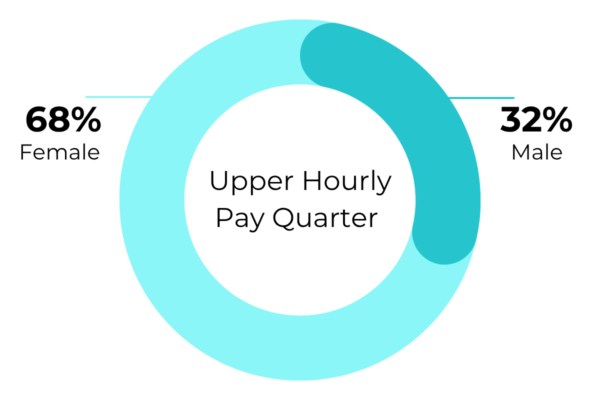
Upper Hourly Pay Quarter
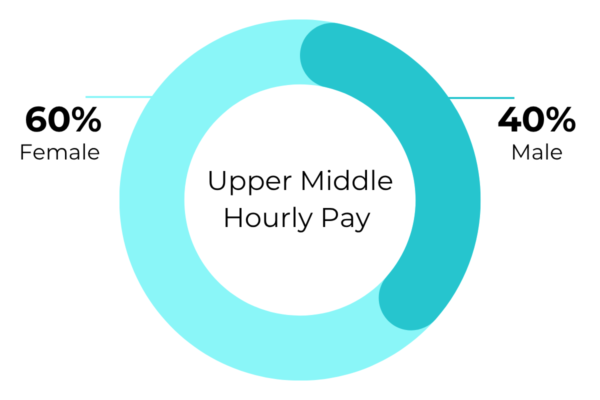
Upper Middle Hourly Pay
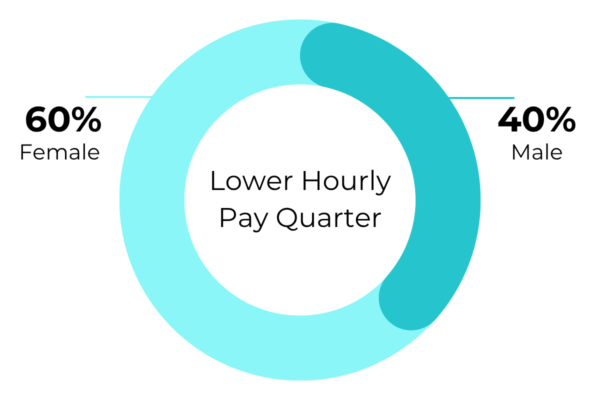
Lower Hourly Pay Quarter
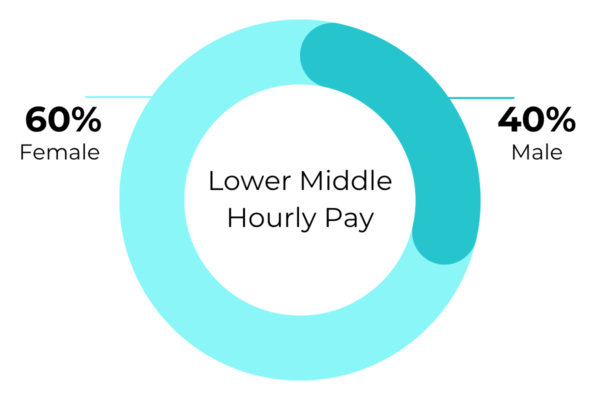
Lower Middle Hourly Pay

Our Results
We are pleased to report a further reduction in our gender pay gap for the reporting period. Our mean gender pay gap has reduced from 5.3% to 2.9%, while our median gender pay gap has reduced from 1.8% to 0.9%.
While the UK continues to report a gender pay gap, with the Office for National Statistics reporting a 6.9% median gender pay gap for full-time employees, our results remain significantly lower than both the national workforce figure and the typical pay gaps reported by UK employers. We believe this reflects our ongoing commitment to fair, transparent and evidence-based people practices.
Women represent 62.4% of our workforce and continue to be well represented throughout the organisation, including approximately 60% of colleagues within both the upper middle and upper pay quartiles. This balanced representation demonstrates that women are progressing into higher-paid roles and leadership positions across the organisation.
During the reporting year we introduced a comprehensive job evaluation framework and completed a pay and grading review. These initiatives have strengthened the consistency, transparency and fairness of our reward arrangements by ensuring that roles are evaluated objectively and remunerated according to their relative responsibilities and organisational value. We believe these improvements have contributed to the continued reduction in our gender pay gap.

Our Commitments
Our commitment to inclusion extends beyond pay. During the year we developed Fedcap Futures, our new Equality, Diversity and Inclusion Strategy, which is aligned to our mission of improving people’s economic wellbeing. Fedcap Futures provides a framework for creating an inclusive culture where colleagues feel valued, respected and able to reach their full potential, while ensuring diversity and inclusion are embedded throughout the colleague experience.
We also recognise the importance of understanding equality beyond gender. Alongside our gender pay analysis, we have continued to develop our Ethnicity Pay Gap reporting, with the median gap currently at 0.7%. By broadening our insight into pay outcomes, we aim to identify opportunities to further strengthen equity across our organisation.
We remain committed to maintaining fair and equitable reward practices and will continue to monitor our data, review our people practices and take action where opportunities for improvement are identified.
