
Supplier name: Fedcap Employment Limited
Publication date: 02.04.2026
Commitment to achieving Net Zero
Fedcap Employment Limited recognises that climate change poses a threat to the economy, nature and society-at-large, our company commits to act immediately in a full and lasting commitment by;
- For our company to achieve Net Zero in line with the Science Based targets set out by the UNFCCC i.e., to achieve Net Zero by 2035 and target a 50% reduction in emissions by 2030.
- To set realistic short- and long-term targets
- To maintain and report the total GHG emissions of our business regularly
In doing so, we are proud to be recognised by the United Nations Race to Zero campaign, and join governments, businesses, cities, regions, and universities around the world that share the same mission.
We acknowledge that our commitment will be reported on the SME Climate Hub website. Fedcap Employment made our pledge to the Race to Zero in December 2023
Baseline Emissions Footprint
Baseline emissions are a record of the greenhouse gases that have been produced in the past and were produced prior to the introduction of any strategies to reduce emissions. Baseline emissions are the reference point against which emissions reduction can be measured.
Current Emissions Reporting
Emissions reduction targets
In order to continue our progress to achieving Net Zero and to align with 1.5 degrees global warming, Fedcap will follow a Science based target pathway, setting near term targets.
The target years show Fedcap’s GHG emissions near term targets to 2030. If Fedcap hits these targets, the company will be aligned with 1.5 degrees global warming.
- Near term Scope 3 emission targets are to engage with 80% of suppliers and understand their carbon emission by 2030.
- Long term Scope 1&2 targets are to reduce to 0 emissions and 100% renewable electricity.
- Long term target to be net-zero 2035
Table 1: Fedcap Employment’s science-based targets and the required % reductions (tCO2e)
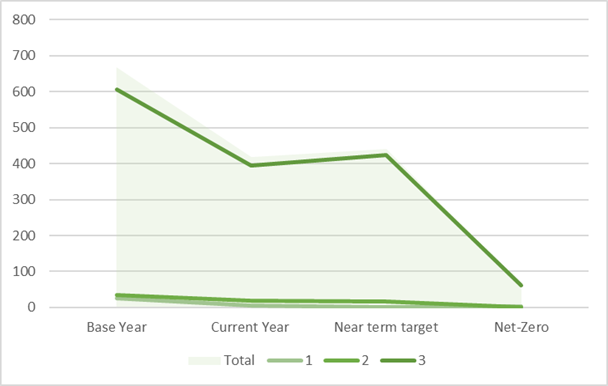
Figure 2: Fedcap Employment’s science-based targets, split by scope
Carbon Reduction Projects
Completed Carbon Reduction Initiatives
Fedcap Employment have implemented the following measures to date to drive our net-zero strategy;
- Increased number of offices on renewable electricity where we are liable for utility bills to 100 % in this reporting period
- We have improved our carbon emissions data collection and management process. We designed a data optimisation process to automate reporting across all scopes and three categories to drive continuous improvement in our methodology as we more accurately report towards our Net Zero Goal. We have also identified improvement opportunities for carbon profiling next year.
- During the reporting period we combined our Sustainability and Social Value Network. This better enables us to drive social sustainability initiatives locally across our 40+ Champion, who have volunteered nearly 500 hours towards implementing community projects across our offices including littler picking re-cycling week to promote environmental action. In addition, we implemented an environmental audit process for local offices to better ensure accountability.
- Ongoing ISO 14001 management and ESOS Certified in March 2025
- To influence our staff and supply chain partners to protect and improve the environment in alignment to PPN 06/20, we upskilled our direct and indirect employees. We implemented carbon literacy training as part of induction for all employees with yearly refreshers, reaching an average of 80% total completion across the business.
- We continued to implement our bi-annual commute surveys to improve how we report against scope 3 – category 7. We exceeded our previous year engagement rate in Sept, reaching 96% completion rate against active staff and 78% against total FTE.
- Planted 8,194 trees via our tree planting partner (TreeApp) over the reporting year supporting a range of global projects.
- We developed an energy policy, defining energy including renewable and non-renewable energy sources, the roles, and responsibilities of internal and external stakeholders to embed energy efficiency in everyday practice.
- We designed a behavioural change programme including a plan to implement a thorough and robust awareness training programme for our employees and supply chain which aims to identify energy saving behaviours across our employees, at all levels of the organisation and our subsidiaries. The behavioural change programme will ensure each department and employee recognises their responsibilities towards our Net Zero objective.
- We developed a travel policy and green travel programme for our people that will promote reduction in energy-related emissions across business travel and commuting.
- Our energy audit identified three offices where we are liable for utility bills, we are currently working with our landlords for those offices and understanding quotes for implementing smart thermostats across these. Out of the three offices that were audited, we have installed a smart meter to manage A/C controls at one of the offices identified (this was our Brighton office). We will continue to work with our landlords to ensure we are promoting sustainable energy savings opportunities and optimising data collection through scope 1, 2, and 3.
- Implemented Food Waste Bins and posters in line with waste regulatory requirements.
Future Commitments
Action Plan & Targets (Near Term):
Scope 1 & 2
Maintain ≥42% absolute reduction in Scope 1 & 2 emissions by 2030 (effectively near-zero through renewable electricity and minimal fuel use)
Scope 3 (measured categories)
≥25% absolute reduction in measured Scope 3 emissions by 2030
- Employee commuting: ≥30% reduction
- Business travel: ≥40% reduction
- Purchased goods & services: ≥25% reduction
1. Employee Commuting (Primary Focus Area)
Expand active and low-carbon travel incentives
Reduce average commute emissions per employee year-on-year
Impact: Addresses ~50% of total emissions
2. Business Travel
Maintain virtual-first policy
Rail over air for domestic travel
Carbon visibility and approval thresholds for flights
Impact: Prevents rebound emissions and locks in reductions already achieved
3. Purchased Goods & Services
Engage top suppliers by spend on carbon disclosure
Embed sustainability criteria in procurement decisions
Prioritise low-carbon IT, print, and facilities services
Impact: Reduces largest non-travel Scope 3 source
4. Electricity & Operations
Achieve and maintain 100% renewable electricity where operational control exists
Continue landlord engagement where utilities are indirect
Impact: Sustains low Scope 2 emissions
Action Plan & Targets (Long Term):
Net-Zero Commitment
Fedcap Employment has committed to achieving net-zero greenhouse gas emissions by 2035, covering Scopes 1, 2 and relevant Scope 3 emissions, in alignment with recognised international climate frameworks including the Science Based Targets initiative and the ISO Net Zero Guidelines.
Emissions Reduction Context
Since the benchmark year, Fedcap Employment has already achieved a 37% absolute reduction in total emissions, driven primarily by:
- Reduced employee commuting emissions
- Lower business travel activity
- Increased use of renewable electricity
- Improved operational and behavioural controls
This progress provides the foundation for achieving net zero within the 2035 timeframe.
Reduction Priority to 2035
In line with ISO Net Zero Guidelines, Fedcap Employment prioritises direct emissions reductions ahead of any neutralisation:
Scope 1 & 2
- Near-zero emissions achieved through renewable electricity procurement and minimal fuel use
- Residual operational emissions reduced as far as technically feasible by 2035
Scope 3 (material categories)
- Structural reduction of emissions from employee commuting through hybrid working and active travel
- Sustained reduction in business travel via virtual-first delivery and rail-preferred travel
- Procurement-led reductions in purchased goods and services through supplier selection and contract management
Neutralisation of Residual Emissions (2035)
Due to the accelerated net-zero timeline, Fedcap Employment will neutralise only those residual emissions that cannot be eliminated by 2035, in line with ISO Net Zero guidance.
Fedcap Employment will achieve net-zero greenhouse gas emissions by 2035 through deep operational and value-chain emissions reductions, with neutralisation applied only to residual emissions, in alignment with the Science Based Targets initiative and the ISO Net Zero Guidelines.
Stakeholder engagement
As a not for profit, we are passionate and committed to understanding more about our impact on the environment and the communities within we serve.
Green talent,: We are committed to supporting access to and raising awareness of green jobs/skills.
We commit to actively talking about our journey to our people , supply chain, customers, funders and through social media and marketing to support further the workforce of a net-zero economy. We have led quarterly reviews to promote our sustainability & social value practices and will continue to actively engage with stakeholders to demonstrate our commitment to achieving Net Zero and delivering a social value return of 25% in the communities in which we deliver through provider calls, forums, and awareness campaigns.
Collectively we can make a difference.
Environmental training and Awareness
Fedcap Employment is committed in green upskilling for our people & delivery partners including access to environmental awareness training. We have made this training available within our Learning Management System. We commit to provide continuous learning opportunities and resources to support our ambition and encourage collective action in and out of the workplace.
We commit to promoting awareness within our business through our dedicated Go Green Intranet page, Go Green campaigns and through our Go Green network of sustainability champions across the business.
Tree Planting
We commit to planting one tree for every customer on our programmes that starts work.
Declaration and Sign Off
This Carbon Reduction Plan has been completed in accordance with PPN 06/21 and associated guidance and reporting standard for Carbon Reduction Plans.
Emissions have been reported and recorded in accordance with the published reporting standard for Carbon Reduction Plans and the GHG Reporting Protocol corporate standard¹ and uses the appropriate Government emission conversion factors for greenhouse gas company reporting².
Scope 1 and Scope 2 emissions have been reported in accordance with SECR requirements, and the required subset of Scope 3 emissions have been reported in accordance with the published reporting standard for Carbon Reduction Plans and the Corporate Value Chain (Scope 3) Standard³ This Carbon Reduction Plan has been reviewed and signed off by the board of directors (or equivalent management body).
Signed on behalf of the supplier

Susan Paterson
Executive Director, Fedcap Employment Limited
Date: 2nd April 2026
1 – https://ghgprotocol.org/corporate-standard
2 – https://www.gov.uk/government/collections/government-conversion-factors-for-company-reporting
3 – https://ghgprotocol.org/standards/scope-3-standard